
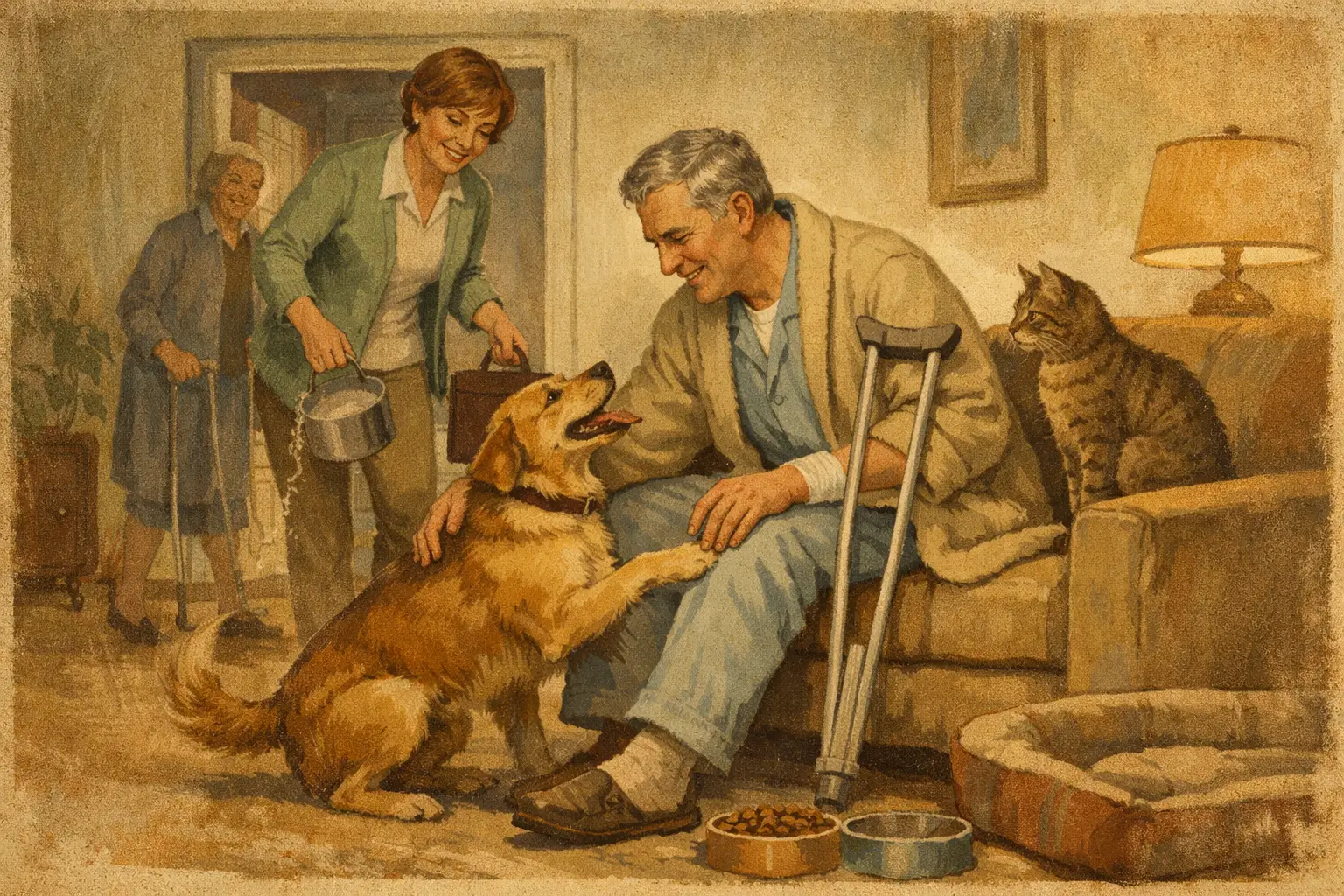
Coming home from the hospital can feel like relief for about five minutes. Then reality hits - medications, follow-up instructions, limited mobility, fatigue, and a pet who still needs food, exercise, cleanup, comfort, and routine. For many people, help with pets after hospital discharge is not a convenience. It is part of a safe recovery plan.
The first few days home are often the hardest. Even patients who expected to bounce back quickly can find that bending to fill a water bowl, walking a strong dog, cleaning a litter box, or keeping up with multiple feeding and medication schedules is more than they can manage. That gap matters because pets depend on consistency, and people heal better when they are not pushing past medical limits just to get through basic animal care.
Why help with pets after hospital discharge matters
Discharge instructions usually focus on the patient, which makes sense. But pet care can directly affect whether those instructions are realistic. If someone has been told not to lift, twist, climb stairs repeatedly, drive, or overexert, caring for a pet may suddenly involve exactly those activities.
A dog that needs two walks a day does not understand that its owner just had surgery. A cat that needs insulin still needs it on time. A bird, reptile, horse, or livestock animal will not pause its care needs because the household is in crisis. Without a plan, people often try to do too much too soon. That can lead to falls, wound strain, missed rest, delayed healing, or a return to the hospital.
There is also an emotional piece that should not be dismissed. Many patients worry more about their pets than themselves while they are hospitalized. Coming home to a pet who has been safely fed, medicated, monitored, and kept in familiar surroundings can lower stress right away. That calmer environment can make recovery feel more manageable.
What kind of pet support may be needed after discharge
The right support depends on the person, the pet, and the medical situation. Some people only need a short bridge for three to five days. Others need daily support for several weeks after orthopedic surgery, cardiac treatment, illness flare-ups, or hospice transitions.
For dogs, help may include walks, potty breaks, feeding, fresh water, medication administration, cleanup, and keeping the dog calm if activity restrictions are in place for the owner. For cats, it may be litter box maintenance, feeding, medication, and watching for behavior changes caused by stress or routine disruption. Multi-pet homes often need even more structure because each animal may have its own feeding rules, medications, and behavior patterns.
More specialized households need specialized care. Fish require water and equipment checks. Birds need feeding, cage care, and handling appropriate to their routine. Reptiles depend on temperature, humidity, and lighting staying correct. Equines and livestock add another layer because they require physically demanding work and close attention to safety. In medically triggered situations, general pet-sitting experience is not always enough.
When family or neighbors can help, and when they may not be enough
Sometimes a relative, neighbor, or friend can cover the basics. If the pet is low-maintenance, the recovery period is short, and the helper is reliable, that can be a good solution. Familiar people can also be comforting during a stressful time.
But there are trade-offs. Informal helpers may have work schedules, travel plans, or physical limitations of their own. They may not be comfortable giving medications, handling a reactive dog, recognizing signs of distress, or coordinating care if the owner needs to return to the hospital. Good intentions are not the same as a care plan.
This is where healthcare-adjacent pet support becomes different from casual help. In a discharge setting, reliability matters more than convenience. The question is not just whether someone can stop by. It is whether they can follow instructions, show up consistently, adapt if the patient’s condition changes, and communicate clearly with family or care teams when needed.
How to plan help with pets after hospital discharge
The best time to plan is before discharge, not after the patient is already home and overwhelmed. If a hospital stay is scheduled, arrange pet support in advance. If the hospitalization was unexpected, the planning may need to happen quickly, but it should still be deliberate.
Start with the pet’s daily routine. Write down feeding times, medications, mobility needs, behavior triggers, emergency contacts, veterinary information, and anything that keeps the pet stable and calm. Include practical details like where supplies are stored, how doors and gates work, alarm instructions if someone is entering the home, and whether the pet has any bite, fear, escape, or handling concerns.
Then look honestly at the discharge instructions. Can the patient safely lift food bags, bend to clean accidents, walk a pulling dog, or drive to buy supplies? If the answer is no, the care plan should reflect that. Recovery is not the time to pretend everything will somehow work out.
It also helps to decide whether support is needed for the pet, the home, or both. Some households need pet visits plus welfare checks, mail retrieval, basic home monitoring, or overnight presence. That is especially true for seniors living alone, patients with mobility limits, and people returning home after a serious medical event.
What professional post-discharge pet care should include
If you are arranging professional help with pets after hospital discharge, look for more than standard pet-sitting language. This situation calls for a provider who understands urgency, accountability, and the realities of medical recovery.
A strong service should be able to explain how quickly it can respond, how it documents care, what happens if the owner’s return home is delayed, and whether it can manage medication administration and behavior concerns. Insurance, bonding, and pet first-aid knowledge matter because medically disrupted households are already under pressure. You should not have to wonder who is entering the home, whether visits happened on time, or what backup exists if conditions change.
Coordination also matters. In some cases, family members, discharge planners, social workers, home-health professionals, or veterinary teams may all be part of the picture. The pet-care provider should be comfortable working within that circle without creating confusion. Calm communication is a real service in a crisis.
That is why organizations built for these moments stand apart. Yavapai Pet Care, for example, centers its work on medically triggered care situations and responds with the kind of structure that makes sense when life happens and the hospital calls.
Common post-discharge scenarios that need extra planning
A patient coming home after joint replacement may be steady on their feet but unable to handle leash pulling or repeated bending. Someone discharged after a cardiac event may need to avoid exertion entirely. A person recovering from infection or cancer treatment may be too weak for daily pet tasks even if they look functional from the outside.
Hospice situations are another category where pet care should be treated with dignity and foresight. Families are often balancing medical visits, emotional strain, and changing household needs hour by hour. Reliable pet support protects routine and reduces one more source of distress.
There are also cases where discharge does not go as planned. A patient may need readmission, skilled nursing, rehab, or a longer recovery than expected. In those moments, the pet-care plan must be able to extend, not collapse.
A safer recovery for people and pets
Pets are often part of what pulls people through a hard medical season. They offer routine, comfort, and a reason to keep going. But love for a pet should not force someone to risk a setback by doing more than their body can handle.
Practical support protects both sides of that bond. It keeps pets fed, medicated, exercised, and emotionally steadier in their own home environment. Just as important, it gives the recovering person permission to focus on healing without guilt.
If you or someone you care about is heading home from the hospital, treat pet care as part of the discharge plan, not an afterthought. The right help can turn a chaotic return home into something calmer, safer, and much more manageable.