
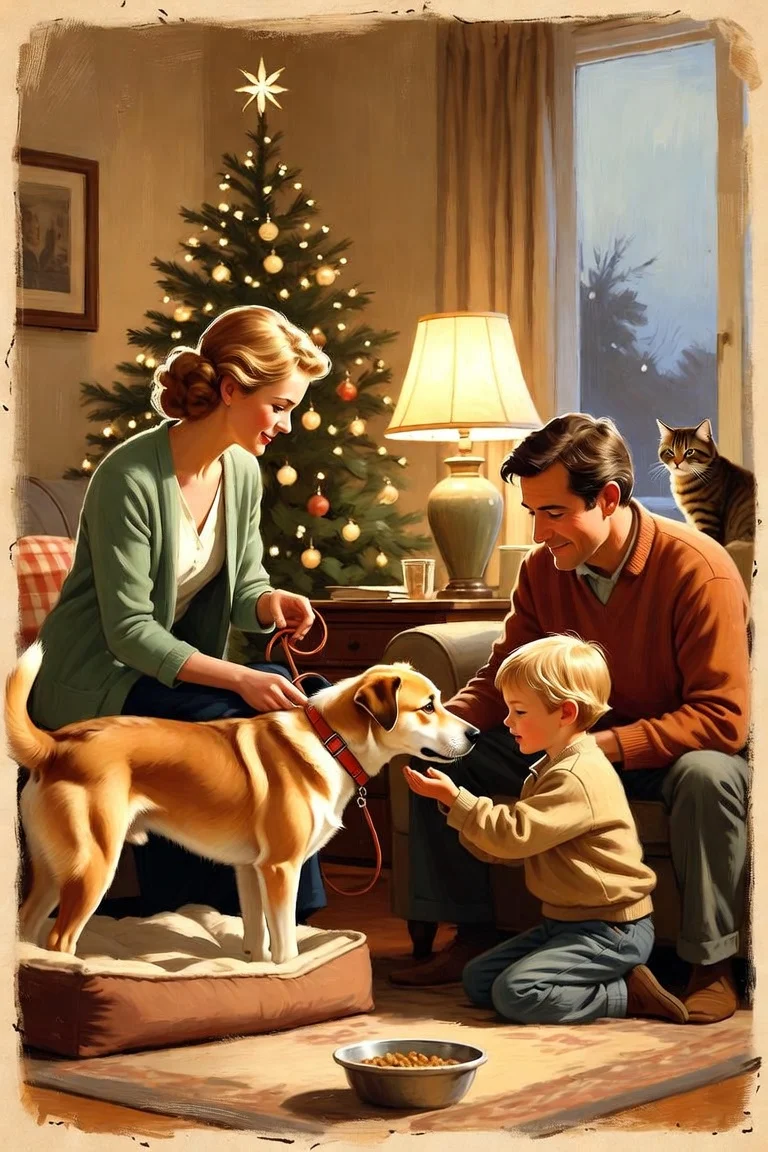
Late fall is when a lot of families start talking seriously about getting a dog. The kids are asking, the house will be full in December, and there is a picture in everyone's head of a new dog under the tree. Shelters and rescues across the country see this interest every year.
Adopting a rescue dog during the holidays can work out well. It can also be harder than people expect, because the season that makes adoption feel right is also the busiest, loudest, least predictable time of the year. The difference usually comes down to planning: choosing a dog that fits your life, and giving that dog a quiet place to land.
Is the holiday season a good time to adopt?
There is an old belief that pets given at the holidays end up back at the shelter in January. The ASPCA has taken the position that pets can be given as gifts responsibly, especially when the person receiving the pet has already shown interest in caring for one and is involved in the choice. Many shelters now hold holiday adoption events for the same reason.
So the season itself is not the problem. The risk is in the details. A dog chosen in a rush, brought home on Christmas Eve, and dropped into a house full of visitors, wrapping paper, and rich food is starting at a disadvantage. The same dog brought home a week earlier, or a week after the guests leave, may settle in with far less trouble.
A few honest questions help:
- Will someone be home most days for the first few weeks?
- Are you traveling in December or January?
- Is everyone in the household on board, including the person who will do most of the daily care?
- Is a new dog the gift, or is the gift the chance to choose one together?
If the timing does not work, a gift certificate, a leash, or a planned visit to a shelter after the holidays can keep the excitement without the pressure.
Choosing the right dog, not just the first one
The holidays add urgency, and urgency makes it easy to fall for a photo. Rescue dogs come with histories that are not always fully known. Some are easygoing from day one. Others are nervous, under-socialized, or carrying habits from a previous home.
Before you visit, think about what your life actually looks like on an ordinary Tuesday. How much exercise can you realistically give? Is there a fenced yard, or will every potty break be on a leash? Are there cats, small children, older adults, or another dog in the house? Who will handle the dog if the main caregiver gets sick or has to travel?
Then ask the shelter or rescue staff what they have seen. They often know which dogs are relaxed with visitors, which ones guard food or toys, and which ones need a calmer home. A dog that is a good match for your household will make the holiday adjustment much easier than a dog you hope will grow into it.
Prepare the house before the dog arrives
A little setup before the first day saves a lot of stress later. Have the basics ready: food the dog has been eating (ask the shelter so you can transition slowly), bowls, a collar or harness with an ID tag, a leash, a crate or a gated area, and a bed.
Give the dog one quiet spot that belongs to them, away from the front door and the busiest room. A crate with a blanket over it, or a small room with a gate, works well. This becomes the place the dog can retreat to when the house gets loud.
Walk through the house with fresh eyes. Holiday decorations, tree ornaments, ribbons, electrical cords, and plates of food left on low tables are all new temptations for a dog that does not know the rules yet. Secure trash cans and keep food off counters for the first few weeks while you learn what this dog will try.
The first days: quiet first, celebrations later
Many shelters and rescues use a rough guideline called the 3-3-3 rule. The SF SPCA describes it as three days for a new dog to decompress, three weeks to start learning the routine, and three months to feel at home. It is not a schedule every dog follows, but it is a helpful reminder that settling in takes time.
In those first few days, a new dog may not eat much, may sleep a lot or hardly at all, may hide, or may have accidents. That is common. Keep things low-key:
- Stick to a simple routine for meals, walks, and bedtime.
- Keep visitors to a minimum, and let the dog approach people rather than the other way around.
- Skip the dog park, crowded holiday markets, and long car trips for now.
- Use short, calm walks on a secure leash. A new dog does not know your home yet and may bolt if startled.
This is where holiday timing matters most. If your house will host a large gathering, consider whether the dog can stay in their quiet room with a chew toy while guests are over, or whether it makes more sense to wait until after the event to bring the dog home.
Introducing a new dog to the pets you already have
If you have another dog, plan the first meeting rather than letting it happen at the front door. Humane societies commonly recommend introducing dogs on neutral ground, with each dog on a leash and handled by a different person. Walking side by side, at a comfortable distance, often goes better than a face-to-face greeting.
Back at home, pick up toys, bones, and food bowls at first so there is less to argue over. Feed the dogs separately. Give each dog their own space to rest, and supervise time together until you are confident they are comfortable.
Cats need their own slow introduction. Many people start by keeping the new dog and the cat in separate areas and letting them get used to each other's scent before any face-to-face meeting. Make sure the cat always has a high place or a room where the dog cannot follow.
If you see stiff body language, growling, raised hackles, or a dog that will not settle, slow down. A trainer or behavior professional can help you set up introductions safely.
Holiday guests and a new dog
Even a confident dog can be overwhelmed by a doorbell that keeps ringing, strangers reaching to pet them, and children running through the house. A nervous rescue dog may hide, bark, or snap.
A few house rules help everyone:
- Tell guests the dog is new and needs space. Ask them not to feed the dog from the table.
- Keep the dog on a leash or behind a gate when the front door is opening and closing. An open door is one of the easiest ways for a new dog to get lost.
- Give children clear instructions: let the dog come to you, do not hug, and leave the dog alone when it is eating or in its bed.
- Watch for signs of stress like lip licking, yawning, tucked tail, or turning away, and take the dog to its quiet space before it gets worse.
None of this means the dog has to miss the holidays. It just means the dog gets to join in on its own terms.
Have a plan if life gets in the way
New dogs and busy seasons have something in common: things change on short notice. Winter illness, a fall on an icy driveway, a family emergency out of town, or an unplanned hospital stay can leave a newly adopted dog without its main person during the weeks when routine matters most.
It helps to decide in advance who can step in. That person should know the dog's feeding schedule, any medications, how the dog does on a leash, and where the dog's quiet space is. Keep your vet's information and the shelter's adoption paperwork somewhere easy to find, and make sure your contact details are current on the dog's microchip and tag.
If you are still deciding on a dog, or you have just brought one home and want help with the first few weeks, Yavapai Pet Care's Perfect Pet Program can help with matching, behavioral evaluation, and home integration coaching, along with follow-up after the dog arrives. Dog training and drop-in visits are also available if your schedule gets complicated.
Giving a new dog a good start
The best holiday adoption stories are usually the quiet ones. The dog spent its first week sleeping in a crate in the back bedroom, met the relatives a few at a time, and by spring was part of the family routine.
If you are adopting a rescue dog during the holidays, choose carefully, prepare the house, keep the first days calm, and have a backup plan. A dog that is given time to settle will usually show you who it is. The celebrations can wait a few weeks. The relationship is meant to last much longer.